Conventional, intensive farming methods have been highly successful at boosting production. However, over time heavy use of inputs has gone hand in hand with landscape simplification and monoculture cropping. Further, Europe imports large volumes of feed for its large livestock sector. Such a system is having significant environmental consequences, including loss of biodiversity, deforestation, climate emissions, water pollution and soil erosion.
Further, today’s farming systems are increasingly vulnerable to both the impacts of extreme weather such as droughts and floods, and to the loss of biodiversity (pollinating insects and natural predators). Rural communities’ livelihoods and long-term food security therefore depend on a shift to sustainable farming and land use.
Our priorities in this area:
Supporting a just transition for farmers and rural communities
Improving the environmental impact of EU farming systems and identifying a suitable mix of regulatory standards and incentives
Furthering knowledge and understanding of the interrelations between environmental health and long-term food production
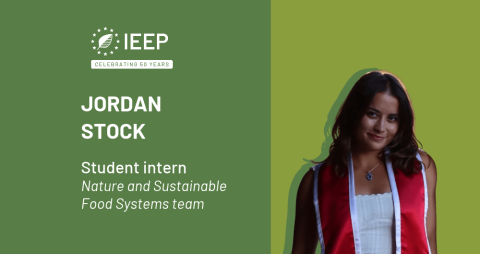
Meet Jordan Stock, a Master’s student from Stanford University, as she shares her experience with the Nature and Sustainable Food Systems team as an a ...
This blog was written by Jordan Stock, a master’s student at Stanford University, during her summer placement with IEEP’s Student Programme. It draws on research ...
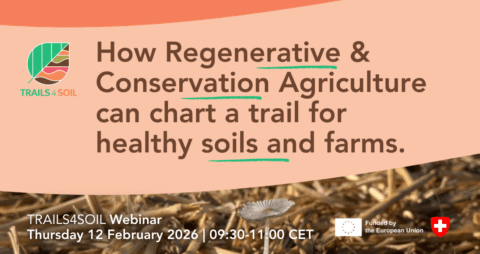
Join this webinar organised by TRAILS4SOIL to know more about Regenerative & Conservation Agricultural Practices and introduce you to our major new research project. ...
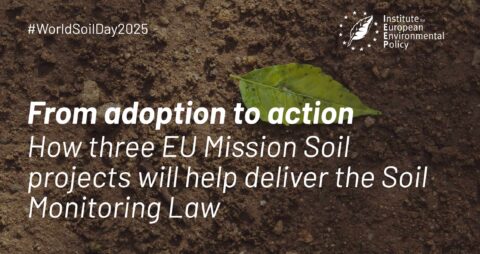
Three Horizon Europe projects—TRAILS4SOIL, EUROSION, and TERRASAFE—have begun generating the tools, data, and governance models to support implementation. ...
I’m Nora, a PhD student in Environmental Communication. I study environmental politics from a discursive perspective, and I take a special interest in the role ...
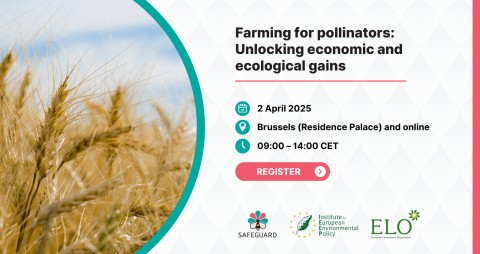
The Institute for Environmental Policy (IEEP), in collaboration with the European Landowners Organisation (ELO), is organising a science-policy conference to explore the crucial yet often ...
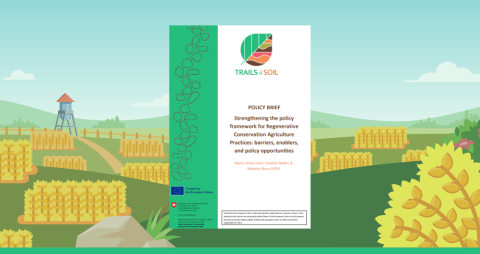
This policy brief examines the factors that hinder and enable the adoption of Regenerative and Conservation Agriculture Practices (ReCAP), and how EU policy can support ...
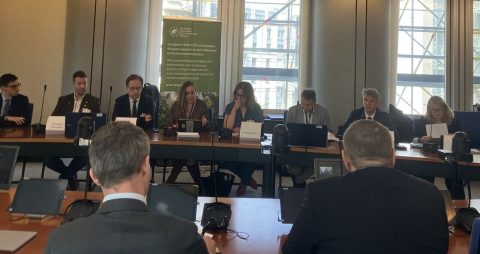
This briefing summarises discussions from a TRAILS4SOIL Science4Policy event on advancing the uptake of regenerative and conservation agriculture (ReCAP) across Europe. ...
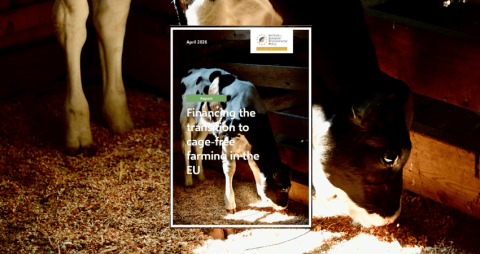
This report provides a comprehensive and up-to-date assessment of how to finance the EU-wide transition to cage-free systems, drawing on scientific evidence, EU policy analysis, ...
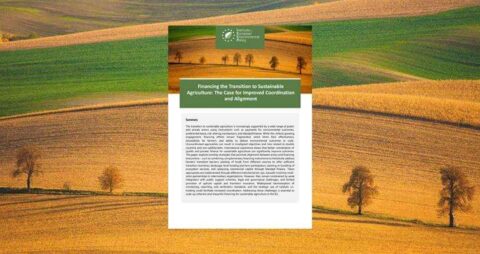
The transition to sustainable agriculture is supported by a growing mix of public and private finance, but current efforts remain fragmented and poorly aligned. This ...
We use cookies on our website to give you the most relevant experience by remembering your preferences and repeat visits. By clicking “Accept All”, you consent to the use of ALL the cookies. However, you may visit "Cookie Settings" to provide a controlled consent.
This website uses cookies to improve your experience while you navigate through the website. Out of these, the cookies that are categorized as necessary are stored on your browser as they are essential for the working of basic functionalities of the website. We also use third-party cookies that help us analyze and understand how you use this website. These cookies will be stored in your browser only with your consent. You also have the option to opt-out of these cookies. But opting out of some of these cookies may affect your browsing experience.
Necessary cookies are absolutely essential for the website to function properly. These cookies ensure basic functionalities and security features of the website, anonymously.
Cookie
Duration
Description
cookielawinfo-checkbox-analytics
11 months
This cookie is set by GDPR Cookie Consent plugin. The cookie is used to store the user consent for the cookies in the category "Analytics".
cookielawinfo-checkbox-functional
11 months
The cookie is set by GDPR cookie consent to record the user consent for the cookies in the category "Functional".
cookielawinfo-checkbox-necessary
11 months
This cookie is set by GDPR Cookie Consent plugin. The cookies is used to store the user consent for the cookies in the category "Necessary".
cookielawinfo-checkbox-others
11 months
This cookie is set by GDPR Cookie Consent plugin. The cookie is used to store the user consent for the cookies in the category "Other.
cookielawinfo-checkbox-performance
11 months
This cookie is set by GDPR Cookie Consent plugin. The cookie is used to store the user consent for the cookies in the category "Performance".
viewed_cookie_policy
11 months
The cookie is set by the GDPR Cookie Consent plugin and is used to store whether or not user has consented to the use of cookies. It does not store any personal data.