
AUTHOR: Greta Holle
Europe’s circular economy debate is entering a decisive phase. With the forthcoming Circular Economy Act set to be adopted later this year, the EU’s circular economy framework is largely taking shape; the real test now lies in implementation.
The message from the “Shaping Europe’s Circular Future” conference at the end of April is clear: circularity requires coordination across entire value chains, aligned regulation, and long-term investment in systems that boost circularity.
Where do we stand with the Circular Economy Act?
The Circular Economy Act is expected to build on existing EU legislation, including the Circular Economy Action Plan, Packaging and Packaging Waste Regulation (PPWR), and the Waste Framework Directive. Unlike earlier circular economy strategies, the Circular Economy Act is framed as an industrial competitiveness tool, rather than just an environmental one. Its broader objective is to lower environmental pressures and increase economic resilience by strengthening sustainable material resource use and reducing Europe’s dependencyon imported raw materials and unstable supply chains. In her opening remarks, MEP Susana Solís Pérez noted that every material loop Europe closes, is one less dependency on imported resources, and therefore a tool for industrial competitiveness and strategic autonomy.
From ambition to implementation: steel, aluminium, and system thinking
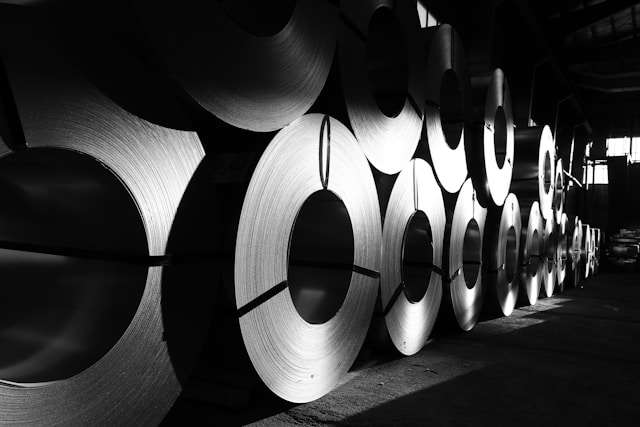
The European Union still has a surprisingly linear economy. Today, only around 11–12% of materials used across the EU come back into the system. Yet, the EU is pursuing a far more ambitious vision. By 2030, the EU aims to raise its circularity rate to 24%, effectively doubling the share of secondary materials flowing back into the economy. But as MEP Solís argued, this target will not be reached through wishful thinking. Across the conference, speakers repeatedly returned to the persistent gap between political ambition and practical implementation. That tension became especially visible in discussions around materials and industrial supply chains. However, one example repeatedly praised during the discussions was steel, which many participants described as a model for what a mature circular material system can look like. Unlike many other materials, steel can be recycled repeatedly without losing quality, making it one of the few materials theoretically capable of operating within a fully closed loop. Industry representatives pointed to steel packaging as a clear success story, with recycling rates in some EU packaging streams already exceeding 80%.
Across all speakers, there was a consensus that Europe does not primarily suffer from a lack of circular economy policy. Instead, there is a gap between ambition and implementation.
Three structural barriers have been repeatedly identified:
- First, lack of harmonised collection and sorting systems across Member States. Differences in national infrastructure create inefficiencies and complicate product design for recyclability.
- Second, insufficient transparency and comparability in Extended Producer Responsibility (EPR) systems. While EPR schemes exist across most Member States, they vary significantly in cost structure, reporting requirements, and operational effectiveness. In some cases, EPR fees primarily finance municipal collection systems rather than incentivising upstream eco-design or improved recyclability.
- Third, limited predictability and regulatory fragmentation, which makes long-term investment decisions difficult for industry. Without stable and harmonised rules, businesses struggle to scale circular solutions across borders.
Speakers such as MEP Bruno Tobback emphasised that “in the current situation, it is no longer just a moral or environmental imperative”. Instead, in the context of rising geopolitical uncertainty, circularity should be used to reduce the European Union’s dependency on external suppliers.
Data, transparency, and the limits of current systems
A further cross-cutting issue raised was the role of data. Several participants highlighted that current reporting systems are either too fragmented or too inconsistent to support effective policy design, particularly for instruments such as eco-modulation. Harmonised and verified data on collection rates and recycling outcomes are needed in order for effective modulation of EPR fees to exist. At the same time, there was caution against reducing reporting requirements too far. The consensus was that data collection needs to be more efficient, comparable, and auditable across Member States rather than reduced. Reliable data was repeatedly described as a precondition for a functioning internal market for recycling.
Conclusions and recommendations
The panel discussion points toward four overarching priorities for the Circular Economy Act if it is to effectively strengthen sustainable material resource use in the EU.
- First, harmonisation must be treated as a core objective, not a secondary consideration. This includes alignment of collection systems, sorting standards, and EPR frameworks across Member States to reduce fragmentation and increase circularity.
- Second, implementation must take precedence over new ambition-setting. The EU already has a strong legislative foundation, particularly through the PPWR. The key challenge now is ensuring that agreed rules are operationalised consistently across Europe, supported by clear secondary legislation.
- Third, transparency and data infrastructure must be significantly strengthened. Without comparable and verified data on material flows and system performance, it will not be possible to design effective incentives or evaluate progress toward circularity targets.
- Finally, a broader shift in perspective is required. The circular economy cannot be reduced to recycling alone. While recycling remains essential, higher levels of the circularity ladder (including reduction, reuse, repair, and product longevity) remain underdeveloped in current policy implementation.
This echoes findings from earlier IEEP work, such as the report “The Missing Piece of the EU Green Deal – The Case for an EU Resources Law.” The analysis already highlighted that Europe’s challenge is not only how materials are managed at end-of-life but the overall scale of material consumption itself. With EU consumption estimated at around twice the sustainable level, focusing only on recycling risks addressing symptoms rather than root causes.
In that sense, a more fundamental shift toward reducing material throughput, embedding sufficiency principles, and linking circularity with resource demand reduction will be essential if the EU is to meet its climate, biodiversity, and strategic autonomy objectives in a coherent way.
Photo by Morteza Mohammadi on Unsplash