
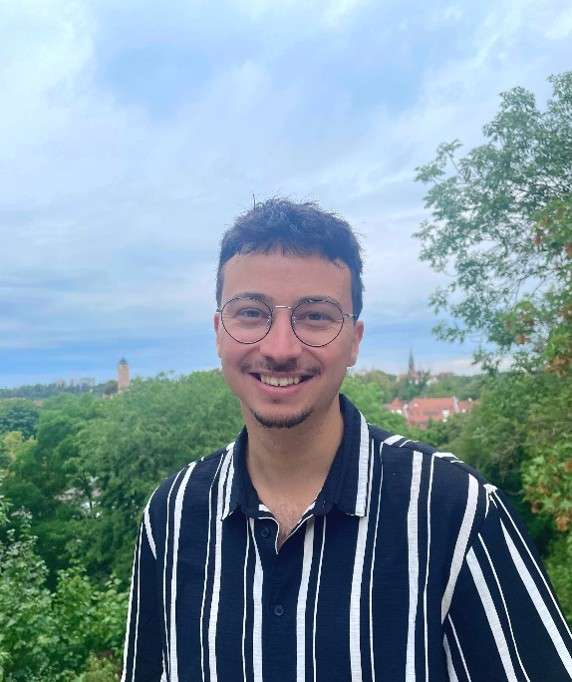
Hi! I am Adrien. As I am completing my Master’s degree in political science at Sciences Po in Strasbourg, France, I had the chance to work in the Communications team at IEEP for three months in the framework of their student placement programme.
My current studies, as well as my background in physics and in history and philosophy of science, led me to develop a keen interest in issues that link science and politics. Over the years, environmental problems, and climate change in particular, have been a site of stimulating reflections on the role of science in addressing global crises and other societal issues, and on the complex interplay of social dynamics through which knowledge comes to inform and structure public debate and policy developments.
For my Master’s thesis, I chose to focus on European think tanks to understand how they contribute to shaping EU climate policy. In the past few decades, think tanks have indeed become key players in policymaking in many parts of the world, positioning themselves on a wide variety of issues from the local to the global level. Their role and impact at different stages of the policymaking process are, however, not very well understood outside of policy circles and the narrow political science literature that studied them.
Hence, my time at IEEP was a great opportunity to find out more about the activities and goals of think tanks partaking in EU policymaking on precisely the topics I was most interested in. From this vantage point, I could see in more detail how policy-applied research is conducted, and how its findings are shared with people involved in crafting or enacting policies. It also allowed me to better grasp the nitty-gritty of EU policymaking, as the EU’s multilevel and multi-stakeholder model of governance entails complex consultation and negotiation processes, and constant engagement with stakeholders across many sectors.
One of the most enriching aspects of this programme was to participate in events and conferences organised by IEEP at various European institutions. Following one particularly enlightening roundtable held at the European Parliament as part of the SHARED GREEN DEAL project on how to improve local, citizen participation in energy transition governance, I had the chance to co-author a policy brief summarising the key takeaways of the discussions between participants.
At these gatherings, it was interesting to see the efforts of IEEP’s policy colleagues to share their expertise and convey scientific findings while attending to their audience’s perspective and remaining keenly aware of policy constraints. It underlines that a think tank’s work is not purely academic, nor does it amount to consulting either. It is mainly concerned with producing objective analysis that aims to determine the applicability, acceptability and effectiveness of specific policy instruments and regulatory measures, and to solve societal problems in the long run without creating new ones. In the context of EU policymaking, this involves taking part in short to medium-term research projects and collaborating with networks of experts and practitioners from public, private and non-profit sectors, as well as writing deliverables and holding events regularly to discuss project advancement and interact with policymakers and stakeholders. There, think tank analysts’ challenge consists in weighing out policy requirements, opportunities and barriers, in finding common ground and aiming at building consensus among all the participants, all the while stating the facts of the matter and remaining true to its scientific spirit.
I particularly appreciated the emphasis that these projects put on experiences and inputs from civil society, and on the needs of people and communities who are affected by either (or both) environmental problems or governmental action, like when bans on fossil fuel-based transport or heating negatively affects lower-income groups, or when certain communities feel excluded from decision-making processes and considerations. This is why I find the value of IEEP’s work on concepts like just transition and local participation so compelling.
During my time at IEEP, I was also assigned various Communications tasks. It was both greatly instructive and enjoyable, as it required reading and understanding the work done by the different teams as they put out new publications. I helped manage IEEP’s social media, where I learned to turn at times complicated policy language into short, accessible content. I also contributed to putting together IEEP’s monthly newsletter and updating the complex and content-rich institute’s website. Further, I assisted in putting together some baseline statistics for future collaborations, which gave me valuable insights into networking and fund-raising operations.
Overall, this experience solidified my interest in pursuing a career at the science-policy interface on climate-related or environmental issues. I am deeply thankful to IEEP’s people, and to Carla Coppola, Ha Doan, and Aditi Desai from the Communications team in particular, for their kindness, trust, dynamism and support. I felt warmly welcomed from my first day, and I really liked the friendly, dedicated, collaborative and skilled environment that everybody at IEEP nurtures. I learned a great deal on climate and environmental policy, and on the making of evidence-based policy in the EU which will be very useful for both my thesis and my future professional endeavours.
IEEP strongly believes in supporting the policymakers and environmental experts of tomorrow. As part of our educational mandate, IEEP is happy to host students in partnership with their Universities as part of their programmes. If you would like to find out more, contact us at brussels@ieep.eu