
AUTHOR: Auriane Flottes de Pouzols
The NaturaConnect Horizon project supports EU Member States in the designation and development of a Trans-European Nature Network (TEN-N). In line with the EU Biodiversity Strategy for 2030, which commits to legally protecting at least 30% of EU land and integrating ecological corridors within these areas, the project delivers key tools to guide implementation. These include maps to prioritise ecological corridors, guidelines for connectivity planning, and data targets to inform the design of TEN-N.
As part of the work within the consortium, IEEP have reviewed and synthesised the best practices in governance and land-use policies for TEN-N implementation. IEEP has assessed available financing options, covering both public funding and private finance mechanisms. A series of webinars was held along with the development of a learning module about financing on the European Nature Academy to inform and diseseminate the results so far.
On 20-21 January 2026, NaturaConnect gathered policymakers, scientists and practitioners in Brussels for a two-day workshop to discuss the preliminary findings of the project dedicated to advancing the TEN-N. With the project nearing completion, this workshop provided an immense opportunity to meet with stakeholders and to critically review the current outputs of the project.
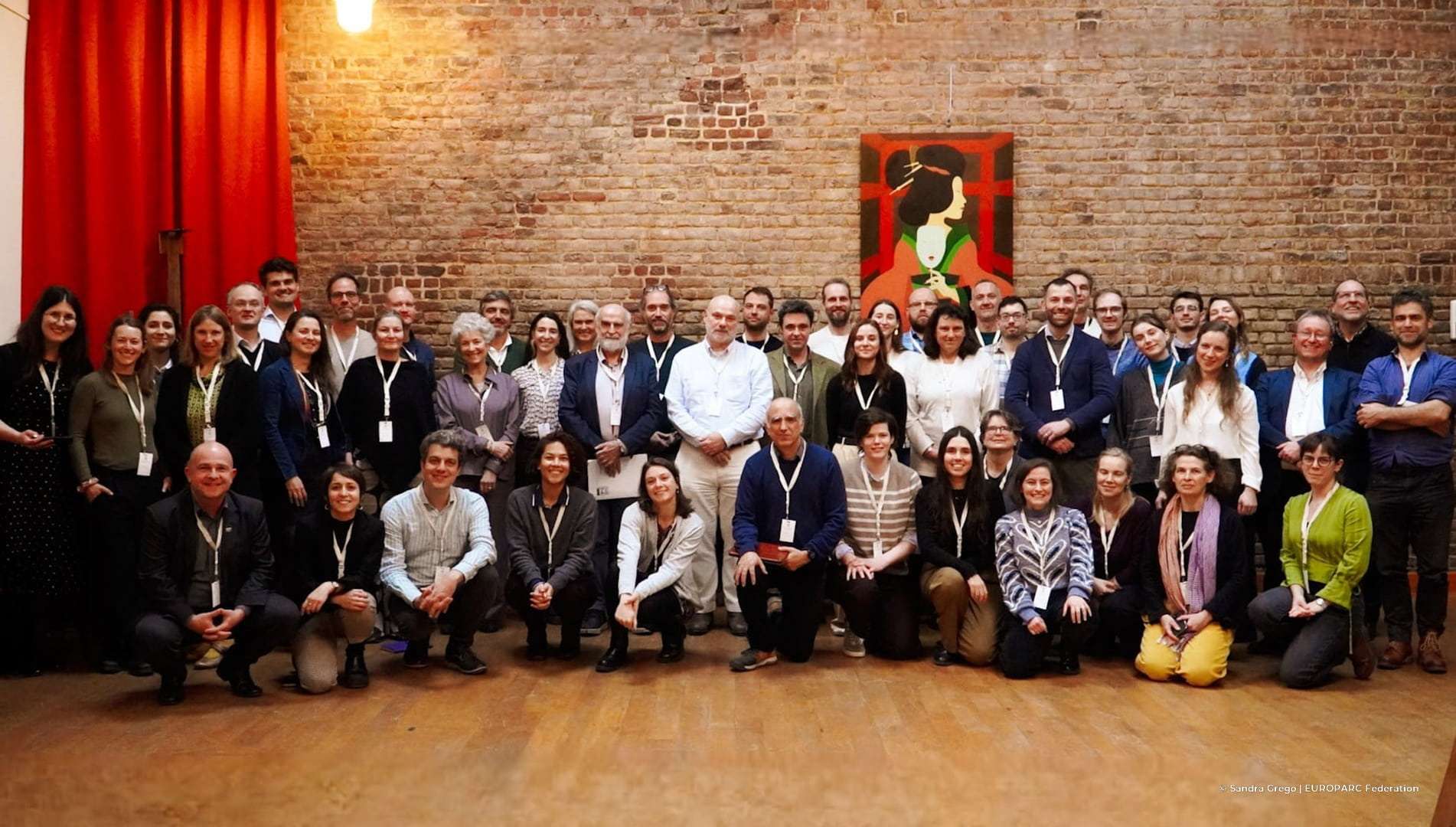
The workshop focused on strategically planning how to translate robust scientific evidence into concrete, actionable recommendations to support the delivery of the EU Biodiversity Strategy for 2030 and the EU Nature Restoration Regulation. Through a mix of presentations, participatory exercises, and discussions, participants explored the key NaturaConnect scientific analyses on the expansion of protected areas and the design of pan-European ecological corridors.
Participants compared connectivity and protected area expansion priorities at EU, national and sub-national levels, and worked collaboratively to shape recommendations for the future implementation of TEN-N. These recommendations addressed planning approaches, governance frameworks and enabling conditions needed to ensure effective action across scales.
Key reflections from the workshop include:
- The need for strong policy enablers and sustained long-term funding to underpin a pan-European monitoring framework.
- The critical importance of capacity building for taxonomic experts, spatial planners and other key stakeholders across Europe to enable effective, harmonised monitoring.
- The need for closer alignment between EU-level ambitions and national and sub-national implementation, ensuring that TEN-N priorities can be adapted to diverse ecological, administrative and socio-economic contexts.
- The importance of clearly articulating the co-benefits of connected protected area networks, such as climate adaptation, ecosystem services and socio-economic resilience, to strengthen political and public support.
- Recognition that governance complexity across borders calls for clearer coordination mechanisms and stronger cooperation between Member States and neighbouring countries.
- Acknowledgement that data gaps and uneven data quality remain major challenges for connectivity planning, underscoring the need for harmonised data standards and improved data-sharing mechanisms across Europe.
To find out more, visit the project website.