
In October 2025, the European Parliament formally adopted the EU Soil Monitoring Law, establishing the first-ever EU-wide framework for assessing and improving soil health. The law sets out clear obligations for Member States: to monitor soil health using harmonised descriptors, define sustainable soil management practices, and address soil degradation and contamination. It aims to ensure that all EU soils are healthy by 2050, in line with the EU’s zero pollution ambition.
As Member States begin the process of transposing the directive into national law, three Horizon Europe projects—TRAILS4SOIL, EUROSION, and TERRASAFE—have started generating the tools, data, and governance models that can support implementation.
What the Soil Monitoring law requires
The Soil Monitoring Law obliges Member States to:
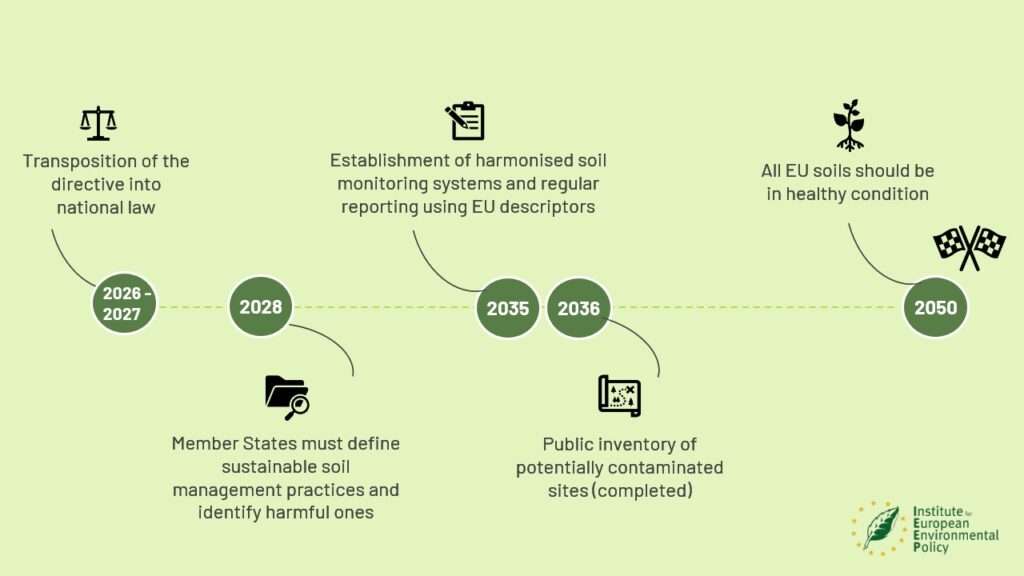
- Establish harmonised soil monitoring systems using common EU descriptors.
- Define sustainable soil management practices and identify harmful ones.
- Create public inventories of potentially contaminated sites.
- Support land managers with training, advice, and capacity building.
Importantly, the law does not impose new obligations on farmers or foresters. Instead, it requires Member States to support them in improving soil health and resilience.
Implementation timeline
What will TRAILS4SOIL, EUROSION and TERRASAFE bring to the table?
TRAILS4SOIL: Living Labs for Soil Health (2025-2030)
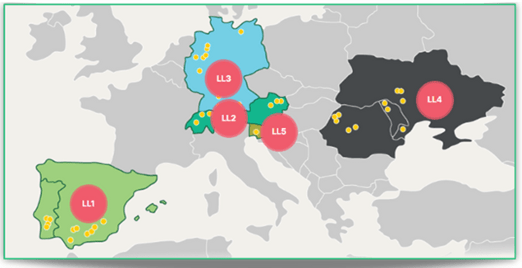
TRAILS4SOIL is building a network of Living Labs across nine countries to co-create and test regenerative and conservation agriculture practices. The project will:
- Develop Monitoring, Reporting and Verification (MRV) technologies for soil health indicators.
- Align its monitoring framework with the Soil Monitoring Law and CAP reform.
- Engage farmers, local authorities, and researchers in co-designing solutions.
Outputs from this project will include validated indicators, digital tools, and policy recommendations, which will directly inform national definitions of sustainable soil management under Article 10 of the Soil Monitoring Directive.
“Society has overlooked soil’s needs for too long and we’re now experiencing the harmful repercussions of that. Soil erosion alone costs the EU economy up to €38 billion every year in reduced agricultural productivity and infrastructural damage. We will share our data from 100 sites with policymakers, farmers and land managers, giving them reliable information on regenerative agriculture. Ultimately, we want to help transform European agriculture for the benefit of all society and the environment.”
Professor Emilio Gonzales-Sanchez (University of Cordoba), coordinator of the project, emphasised the urgency of addressing the pressures on Europe’s soil
Visit the project website or sign up for the newsletter
EUROSION: A Pan-European Soil Erosion Monitoring System (2025-2030)

EUROSION is developing a harmonised monitoring scheme and a dynamic platform to track soil erosion across Europe. Over the next five years, the project will:
- Create a robust multi-scale monitoring scheme and network for wind, water and tillage erosion, providing reliable estimates and validated indicators.
- Support spatial planning and land management decisions, running in close collaboration with local stakeholders.
- Offer policy recommendations on best management practices to improve CAP measures and outcome-based schemes.
EUROSION’s platform and monitoring protocols are designed to be interoperable with EU databases, making them immediately useful for Member States implementing the Directive.
TERRASAFE: Supporting Soil Resilience in Desertification-Prone Areas (2024-2029)

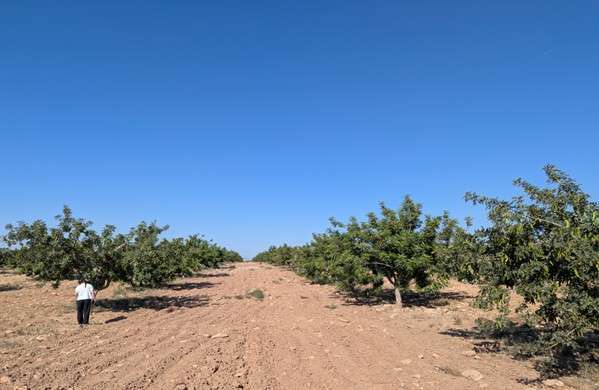
TERRASAFE focuses on regions vulnerable to desertification, where it is working with local communities to combine nature-based, social, and technological innovations to confront the threat of desertification. For the past two years, it has:
- Formed Desertification Innovation Partnerships in each pilot area (i.e., Spain, Tunisia, Cyprus, and Romania).
- Identified solutions and practices to be tested in each pilot site.
It is also currently designing the monitoring protocols and an approach for co-developing and assessing policy options with the Desertification Innovation Partnerships in each site.
Its pilot areas and multi-actor partnerships offer replicable models for Member States facing similar challenges.
Visit the project website or sign up for the newsletter
How can results from these projects support the implementation of the Soil Monitoring Law?
The Horizon Europe projects TRAILS4SOIL, EUROSION and TERRASAFE are positioned to support Member States in implementing the Soil Monitoring law by,
- Providing practical tools and validated indicators
- Offering policy insights for national implementation and supporting land managers through training and advice
- Demonstrating practical approaches through stakeholder engagement and multi-level governance
Together, the three projects will help to bridge the gap between the legal requirements and operational delivery, providing both authorities and planners with actionable guidance.