AUTHORS: Ange-Manon Tang and Irene Chiocchetti
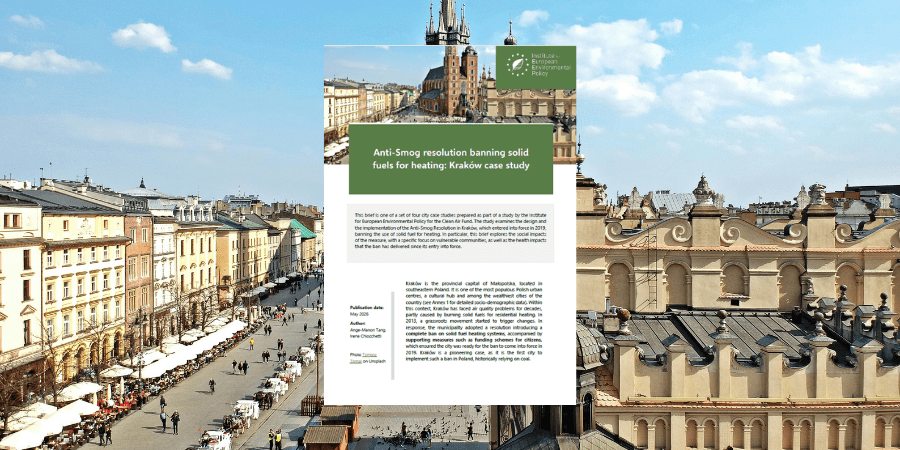
The study examines the design and implementation of the Anti-Smog Resolution in Kraków, which entered into force in 2019, banning the use of solid fuel for heating. In particular, this briefing explores the social impacts of the measure, with a specific focus on vulnerable communities, as well as the health impacts that the ban has delivered since it entered into force.
Kraków provides a notable example of successful air quality improvements following the implementation of the Anti-Smog Resolution, a regional measure that prohibits the use of solid fuels for heating within the city. The city achieved impressive results, firstly by amending the national law to expand local authorities’ powers, and secondly by shifting away from long-entrenched heating habits, in a country traditionally and heavily reliant on coal.
The ban originated from a bottom-up initiative rooted in widespread public health concerns, impacting the entire population. Through close cooperation and open, constructive dialogue between citizens, NGOs, local authorities, and the scientific community, it delivered impressive results at the local level first, in a country traditionally and heavily reliant on coal.
Supported by comprehensive replacement programmes and the effective mobilisation of national and EU funding, the city ensured that citizens were accompanied throughout the transition before the ban entered into force in 2019. By 2019, over 25,000 individual solid-fuelled devices had been replaced. These measures resulted in a reduction of the annual mean of PM2.5 levels (37 in 2013 vs. 17 in 2024) and in the yearly number of days exceeding the WHO PM10 levels (132 in 2012 vs 31 in 2023).
The Institute for European Environmental Policy explores the social dimensions of this exemplary case study. The findings focus on the design elements, social acceptability of the measure, stakeholder engagement processes, and the strategies the city adopted to address concerns on energy poverty and affordability. Several lessons can be drawn from this experience:
- Local authorities listened to the population and adopted coherent measures to improve air quality.
- Ensuring stakeholder cooperation of all concerned stakeholders for effective air quality policy.
- Data and mapping are essential for understanding the local context, the spatial distribution of pollution and the related citizens’ needs.
- Success is reached through clear and active communication, outlining policies’ expected objectives and benefits, and any supporting measures.
- Funding must come first. The city’s replacement programmes, together with the national and EU funding before the ban’s entry into force, ensured a smooth implementation.
This work has been produced with financial support from the Clean Air Fund.