AUTHORS: Axel Godfroy and Kaley Hart
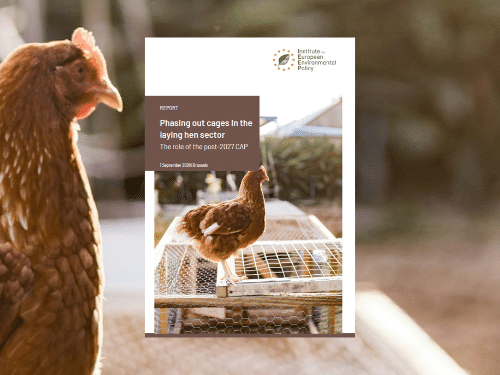
This report examines the potential of the Common Agricultural Policy (CAP) proposals for the 2028-34 period to support the transition to cage-free systems, with a particular focus on the laying hen sector. Revisions to the broilers and laying hens welfare legislation are expected by the end of 2026, including the much-anticipated phasing out of cages for laying hens.
If a ban on cages is adopted, several challenges will have to be overcome. The report identifies the need for veterinary advice and training, access to land, the lack of long-term contracts with retailers, and competition with imported products as key challenges faced by farmers in implementing the transition. However, the main concern remains the financial costs of the transition, including both upfront investments and operational costs.
Addressing these challenges will require a focus on the most effective ways to facilitate this transition to cage-free farming, including possible funding opportunities.
The market will remain an important driver of change, particularly in the laying hen sector given the strong consumer demand for shell eggs from non-caged systems. However, public support will still be required in some situations, for example for smaller farms. Proposals for the future Common Agricultural Policy (CAP) for 2028-34 offer some opportunities here.
The report formulates the following recommendations, for action at both national and EU levels:
EU level
- Setting a long-term vision, clear objectives and timelines, notably through the revision of the on-farm animal legislation, which should include a ban on cages for laying hens.
- The European Commission should promote the availability of both CAP and non-CAP funds to support high animal welfare and provide guidance on how these could be used in practice.
- Minimum animal welfare standards should be strengthened as a condition for receipt of CAP support under the new farm stewardship requirements, including bans on harmful practices.
- When providing recommendations to Member States on the priorities to address in their NRPPs, the European Commission should emphasise phasing out cages for livestock.
National level
- Member States should develop and communicate species-specific transition plans for phasing out cages, identifying financing needs and training requirements.
- Prioritise the use of public money to fund “transformative” change and combine with other sources of funding.
This report was commissioned by Humane World for Animals. Read the report.