
Meet Greta Holle, a Master’s student from the European University Institute, as she shares her experience as an intern at IEEP.
If you had told me a few years ago that I would be spending my days discussing electricity grids, air quality policy, and following policy debates at EU institutions, I probably wouldn’t have believed you. Yet that is exactly where my time at IEEP took me. What began as an opportunity to learn more about EU policymaking quickly became an experience that challenged me and showed me what it actually means to bridge research and policy.
I am Greta, a Master’s student in Transnational Governance from Germany. Coming into my student internship at IEEP, I was looking for an opportunity to deepen my understanding of European policymaking. This was due to the fact that EU policy was notably absent from much of the curriculum during my bachelor’s degree in IR and Development at the University of Sussex in the UK. As someone who considers themself deeply European (having grown up in the Netherlands, the UK, and Germany, and now living in Italy while completing my master’s at the European University Institute), I wanted to engage more directly with the policies and institutions that shape the environmental policy of the European Union. Although my master’s has given me a strong academic foundation of EU policymaking, I was keen to step outside the lecture hall and see what it actually looks like in practice. That ambition ultimately led me to IEEP for my curricular internship. I joined during one of the busiest weeks of the year, with preparations for the Think2030 conference in full swing. On my second day, I found myself attending both Think2030 and a conference at Steel for Packaging Europe (for which I also wrote a blog post), a whirlwind introduction to the pace and variety of work at IEEP. Over the following months, I also had the opportunity to attend events at the European Parliament and other EU institutions, as well as a screening of Life on Earth at the UK Mission to the EU. These experiences brought so much of what I had studied to life and gave me a much better understanding of how policymaking in the EU works.
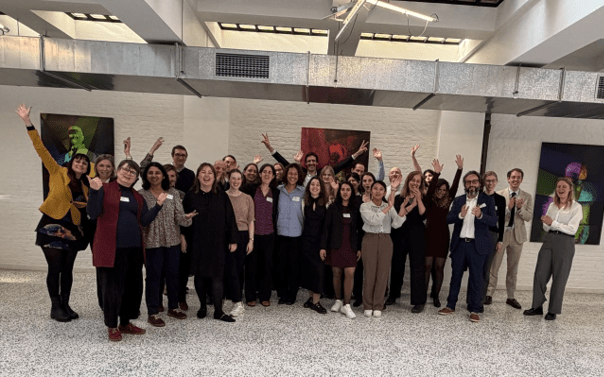
One concept that stayed with me from my last year at the EUI was the role of third-party actors in governance. Being part of a think tank showed me how third-party actors such as IEEP can bridge the gap between research and policymaking by producing evidence-based analysis, helping shape policy debates. One of the most rewarding aspects of my internship was the opportunity to contribute substantively to research projects rather than simply observing from the sidelines. I worked on a project for the Clean Air Fund exploring the social acceptability of heating-related low-emission zones and clean heating measures across European cities. My work focused two case studies: Utrecht’s indoor wood-burning ban by 2030 and Madrid’s ban of coal-fired boilers in 2022. I also contributed to research on the social justice implications of Europe’s electricity grid modernisation, examining how the costs of the energy transition can be distributed more fairly and how vulnerable households can be better protected. This was undoubtedly the most challenging project I worked on. At first, the topic felt intimidating, but that quickly became one of the most valuable parts of the experience. Being trusted to write sections of the report itself meant I had to engage deeply with the research, and as a result I learned far more than I would have by simply supporting the project in the background. Having the opportunity to contribute directly to a published piece of policy research is something I know is not a given in many internships, and I really appreciated the confidence placed in me.

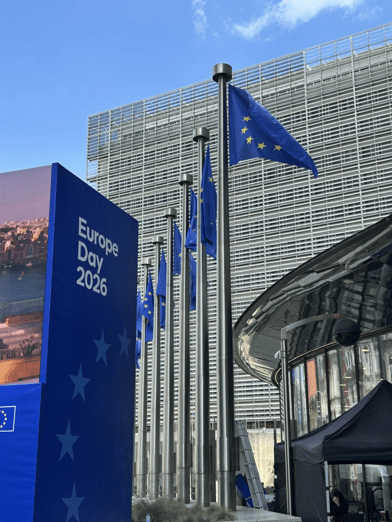
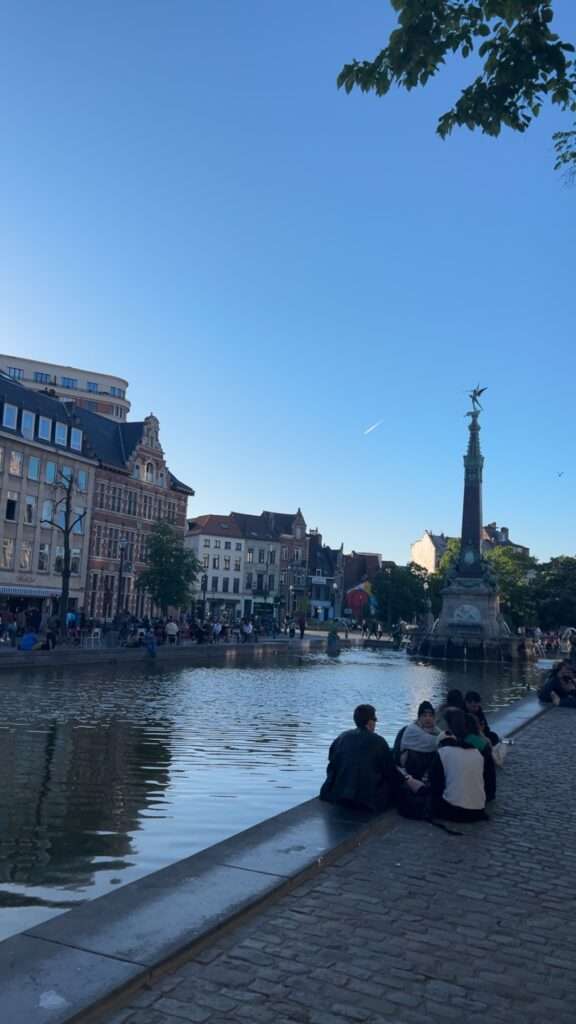
Of course, what made this experience truly enjoyable were the people. From my first day (even though everyone was stressed with Think2030 preparations), everyone at IEEP was incredibly welcoming and approachable. In particular, I am grateful to Chiara Antonelli and Irene Chiocchetti, who gave me the independence to develop my own ideas while always being available to provide guidance when I needed it. Thank you!
As I return to Florence, I will do so with a much richer understanding of European policymaking, bringing back new perspectives from Brussels to the historic halls of Palazzo Buontalenti. I am incredibly grateful for the opportunities IEEP has given me, and I look forward to carrying these experiences with me back to Florence!
IEEP strongly believes in supporting the policymakers and environmental experts of tomorrow. As part of our educational mandate, IEEP is happy to host students in partnership with their Universities as part of their programmes. If you would like to find out more, contact us at brussels@ieep.eu