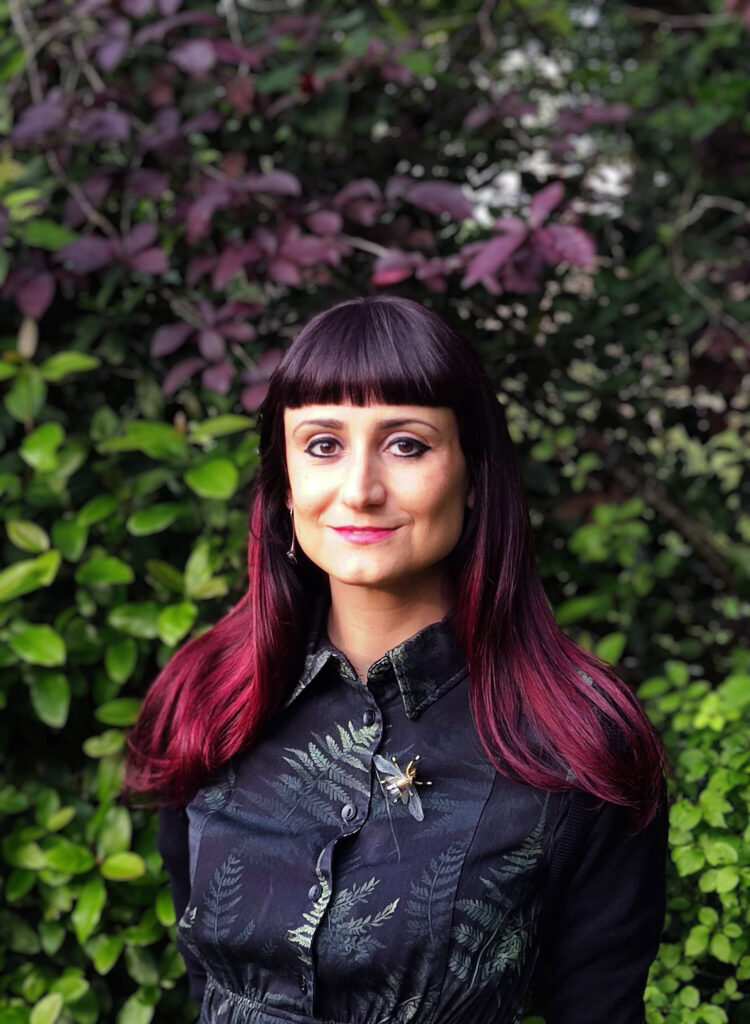
Meet Alice Albertini, EU Policy Coordinator at the European Association of Zoos and Aquaria (EAZA), and first mentee of our Mentorship Scheme in collaboration with the European Geosciences Union (EGU).
Ciao! I’m Alice Albertini, and I am passionate about the many dimensions of nature conservation. I joined IEEP for a year through the EGU–IEEP Mentoring Programme, and the experience has been deeply enriching.
I have a background in entomology, with a PhD and postdoctoral research focused on the use of beneficial soil beetles to support more sustainable olive cultivation, following the principles of conservation biological control. While I was committed to my research, I often found it challenging to engage directly with practitioners (e.g. farmers in my case), which led me to reflect on the importance of ensuring that scientific work translates into practice, beyond peer-reviewed papers alone.
Later, working at the Italian Ministry of Agriculture, I contributed to the behind-the-scenes management of EU-funded research programmes on sustainable agriculture and climate change. That experience revealed to me the intricate relationship between EU institutions shaping research priorities, and scientific findings influencing parts of the policy dialogue. It sparked an interest I had not developed during my biology studies, where the natural world had felt more neatly categorised than the science-policy landscape I was beginning to discover.
When I moved to Brussels, that landscape proved even more complex than expected, and I often felt I lacked the tools to fully grasp it. In that context, IEEP’s published works quickly became a point of reference for me, offering structured, evidence-based information and clear analysis of environmental implications.
I now work as EU Policy Coordinator at the European Association of Zoos and Aquaria (EAZA), focusing on the combined role of ex-situ and in-situ conservation. Often overlooked, ex-situ conservation (practised by zoos, botanic gardens and seed banks) is grounded in both science and policy (including Target 4 of the Kunming-Montreal Global Biodiversity Framework).
Still, as I became more familiar with the EU bubble, I realised that I wanted to build a more structured and strategic approach to policy. My scientific background, my passion for biodiversity and my growing engagement with environmental policy were not always sufficient to capture the full picture, especially in a rapidly evolving context marked by EU Parliament elections, fake news narratives (such as the so-called “NGO scandal”), debates around the EU Deforestation Regulation, and decisions on species protection like the Eurasian wolf whose scientific basis has been widely debated.
At a very timely moment, I was selected for into the EGU–IEEP mentoring scheme. The European Geosciences Union (EGU) had already established similar initiatives, and together with IEEP they launched this new programme – of which I am proud to be the first mentee! It aims to support early- to mid-career researchers working outside academia, strengthening their understanding of EU policymaking and science-for-policy skills.
The scheme required 2-3 days per month over one year, allowing me to continue my full-time role at EAZA. Yet summarising what I gained from those 12 months is not easy! Rather than attempting an exhaustive list, here are a few elements that were particularly transformative.
Mentorship
My mentor, Mattia Bonfanti (Head of Strategic Partnerships at IEEP), played a key role in shaping the experience. Through regular and thoughtful exchanges, he guided me in identifying relevant topics, connecting with colleagues, and seizing opportunities. This dedicated mentoring dimension was central to the programme’s value.
An intellectually stimulating environment
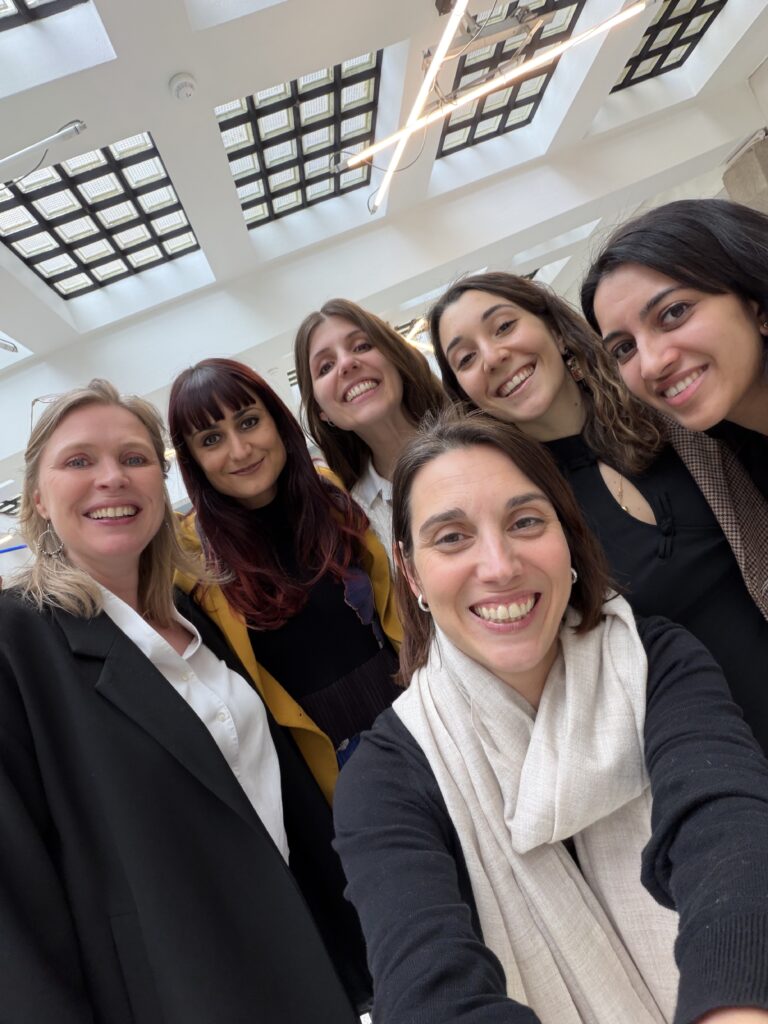
The IEEP office provided a rich learning setting. I was exposed to a wide diversity of environmental topics through meetings, events, internal discussions and informal exchanges. I valued the professional environment, especially the collaborative and analytical approach of colleagues.
Developing policy-oriented outputs
For the first time, I contributed to policy briefs! This experience marked a significant professional milestone, as it led me to work again with researchers, but with a new perspective focused on translating science into policy-relevant insights.
Reconnecting with my research roots
Together with IEEP Biodiversity Team, one of the briefs I worked on looked at enhancing wild pollinators in urban habitats. Interestingly, after years away from insects, this brought me back to six‑legged creatures: this time through a policy lens, bridging my scientific background with broader biodiversity discussions.
Going deeper into EU environmental legislation
I engaged more deeply with EU environmental legislation and the dynamics shaping it, including discussions around implementation challenges, for example in relation to the EU Deforestation Regulation when it was a hotly debated policy file.
Working within a think tank setting
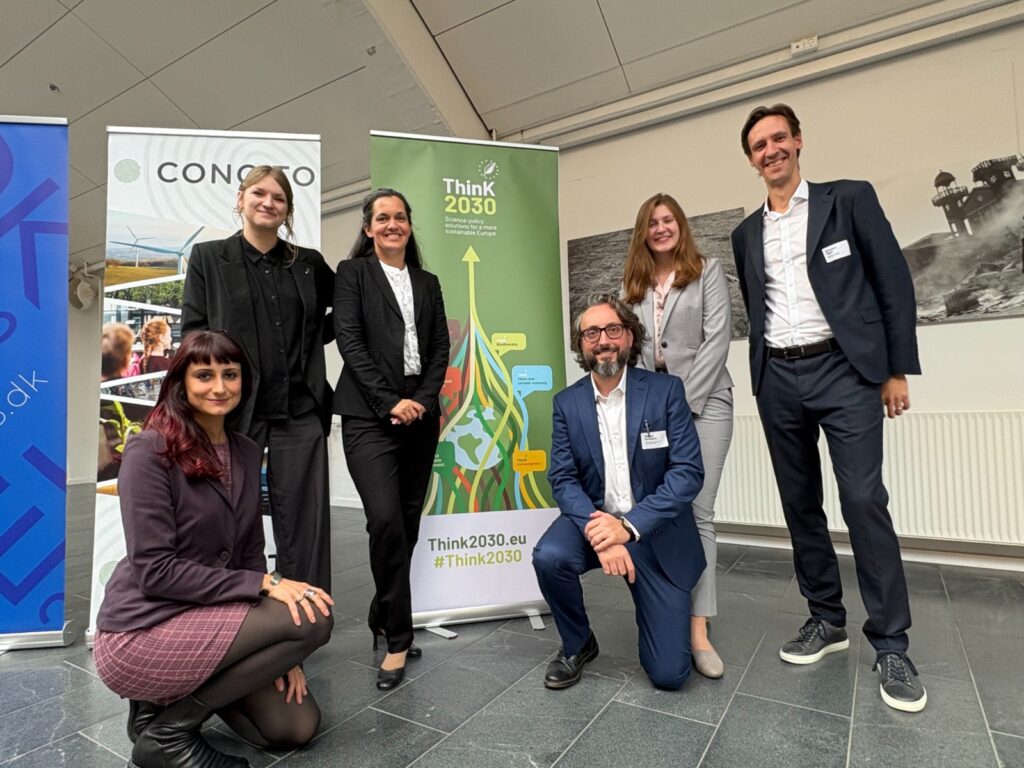
This was also my first direct experience with a think tank, which offered me a clearer view of how an independent, evidence-based and impartial organisation like IEEP operates and communicates in practice. I contributed to the activities of the Think Sustainable Europe network, including the biodiversity working groups for which I supported and moderated some webinars, and I also attended two Think2030 events, organised under the Danish and Cypriot Presidencies of the Council of the EU.
Stepping outside my comfort zone
While the Mentoring Programme was exciting, it was also at times challenging. I encountered unfamiliar topics, methods and networks. A considerable part of this journey involved addressing my own imposter syndrome. Coming from academia, I was used to deep specialisation, where expertise is slowly built over years. In contrast, the policy environment, rapidly evolving, requires the ability to quickly grasp issues and prioritise key aspects. Learning to navigate this shift was also a personal milestone.
A final step at the EGU General Assembly
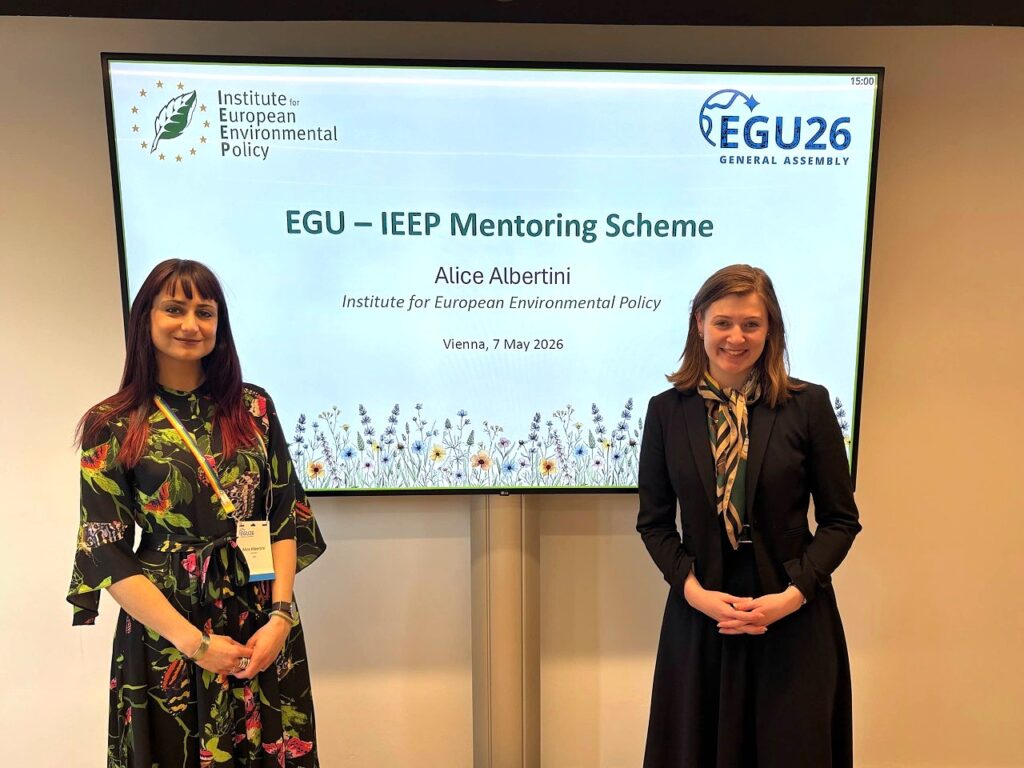
The programme culminated in my participation at the EGU General Assembly in Vienna this year, a major conference with over 22,000 participants! There, I had the opportunity to share my experience and reflect on the science-policy interface alongside inspiring professionals in the field. Although most of my work during the programme was carried out with IEEP, communication with EGU was consistently smooth, and I am grateful for their support in making this experience possible.
Looking back, this experience marked a defining step in my professional journey. It helped me better position myself at the intersection of science and policy, and strengthened my confidence in working within complex policy environments. I am deeply grateful to IEEP and EGU for this opportunity, which continues to shape the way I approach my work. I am also grateful to EAZA for the flexibility that allowed me to fully engage with the programme throughout the year. I would further like to thank the welcoming IEEP colleagues I worked and exchanged with, who made this experience both stimulating and genuinely enjoyable!