AUTHORS: Chiara Antonelli, Irene Chiocchetti, Ange-Manon Tang, Greta Holle and Lena Ruiz González
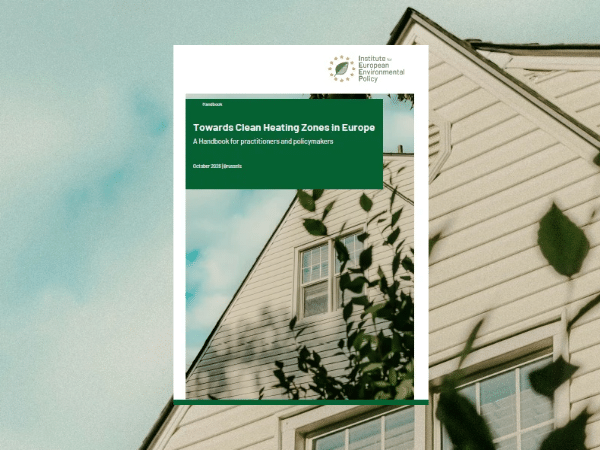
Reducing emissions from domestic heating is crucial to improving air quality, protecting public health and meeting climate goals. However, successful implementation needs more than just replacing technologies: it depends on public trust, affordability, stakeholder engagement and policies tailored to local contexts. Developed as part of the Beyond the Smoke project, this handbook presents the Clean Heating Zones (CHZs) concept for the first time. Building on lessons from pioneering European cities, it offers practical recommendations, key design principles and implementation steps to help policymakers and practitioners develop integrated, socially fair and locally adapted clean heating strategies.
Across Europe, domestic-heating-led air pollution poses a serious health threat, being responsible for an estimated 240,000 premature deaths each year from fine particulate matter (PM2.5) in the EU alone. While significant progress has been made in reducing emissions from certain sectors, including industry and transport, residential heating from fossil fuels, waste and solid biomass are still unsolved issues severely affecting air quality, public health and climate objectives.
This handbook introduces for the first time the concept of Clean Heating Zones (CHZs) as a practical approach for practitioners with the objective of improving air quality and the transition to clean heating. Inspired by the experiences gathered from low-emission and clean-heating measures implemented across European municipalities, CHZs are a combination of regulatory measures, financial support, infrastructural investments, promoting active stakeholder engagement, and social safeguards to reduce emissions from residential heating while ensuring their social acceptability.
Developed as part of the “Beyond the Smoke” project, the handbook builds on the insights gathered through four case studies examining local measures implemented at the city level to improve air quality through sustainable heating. The case studies focus on policies adopted in Sofia, Kraków, Utrecht and Madrid, which were selected for their distinctive features: the first LEZ for heating in Europe (Sofia); a total ban on solid fuels for heating that was promoted by a grassroots movement and, through strong cooperation with local authorities, contributed to changes in Polish law (Kraków); the first complete ban on wood-burning in the Netherlands (Utrecht); and an ambitious sustainability strategy addressing both climate change and air pollution (Madrid). Despite their differences, all the case studies show that effective clean heating strategies are tailored to local contexts, governance structures, housing characteristics, energy systems, and social needs. Therefore, common lessons emerge on the importance of long-term planning, citizen engagement, financing, and targeted support for vulnerable households, which have been identified as key steps for the design of CHZs.
This handbook is intended for local authorities, practitioners, wider-scale policymakers and stakeholders with vested interests in air quality, energy, climate and social policies. The insights collected aim to provide practical guidance on how to design, implement and monitor CHZs, suggesting the introduction of key elements, the steps needed at each stage of design and implementation and how to integrate key elements such as engaging affected communities, securing funding, managing challenges and evaluating outcomes.
A central message of this handbook is that clean heating cannot be reached through technical solutions alone. The success of the measure(s) will depend on public trust, addressing affordability concerns correctly and ensuring that costs and benefits are distributed fairly. Policies failing to account for social aspects risk public resistance, while measures integrating social justice considerations have higher chances of bringing concrete, long-lasting health and environmental benefits.
As European cities aim to meet increasingly ambitious air quality and climate goals, CHZs offer an adaptable and replicable approach to reducing emissions from domestic heating and simultaneously offer health, comfort and quality of life improvements. Through evidence, practical experience and actionable recommendations, the handbook’s objective is to support decision-makers in producing equitable and effective measures for cleaner heating systems and healthier communities.
What to highlight:
- Domestic heating is a significant source of pollution and greenhouse gas emissions across Europe;
- Clean Heating Zones can provide a holistic approach to address air quality, climate goals, energy security and social objectives at the same time;
- To successfully implement a Clean Heating Zone, a mix of regulatory instruments, incentives, infrastructural investments and stakeholder engagement is required;
- Social justice and affordability must be included in the policy design from the beginning;
- Examples from European cities show that an ambitious clean heating transition is feasible and also beneficial, if adequately tailored to local context;
- Local authorities are key players in driving the transition, but the success will ultimately depend on cooperation across all levels of governance and with affected communities.
This project has been completed with the support of the Clean Air Fund.